Future Projects
Currently, we are developing cutting edge systems that will reshape how nations verify treaties, secure biotechnology, and protect against emerging threats. Together, we can replace the systems of the past with a new generation of secure solutions.
01 SafeSeq: Secure DNA Printing
In Development Not too long ago, we were all faced with the emergence of the COVID-19 pandemic. With DNA synthesis becoming cheaper and more accessible, as well as the prospect of small desktop printers capable of producing long genetic sequences such as viruses on the rise, the plight of yet another global disaster is not far off. While this technology will transform research, it also raises serious safety concerns making us question: how can we make sure people are using these tools responsibly without slowing innovation or exposing sensitive scientific data?
SafeSeq: Secure DNA Printing
In DevelopmentNot too long ago, we were all faced with the emergence of the COVID-19 pandemic. With DNA synthesis becoming cheaper and more accessible, as well as the prospect of small desktop printers capable of producing long genetic sequences such as viruses on the rise, the plight of yet another global disaster is not far off. While this technology will transform research, it also raises serious safety concerns making us question: how can we make sure people are using these tools responsibly without slowing innovation or exposing sensitive scientific data?
This project will create a new privacy-preserving way for labs and researchers to show that a DNA sequence has been screened for safety without revealing the sequence itself.
What the system will do:
• Provide a "proof of safety" for DNA sequences — a user can request a digital safety check from an approved screening organization. They receive a cryptographic proof stating that the sequence is considered safe but the sequence itself remains private.
• Work with multiple screening methods — the system is designed to accept safety checks from different organizations and protocols. By accepting these safety checks it keeps the ecosystem flexible as screening technologies improve.
• Create a secure record for accountability — safety proofs can be published to a tamper-resistant registry. If a major incident occurs, authorized groups (like WHO or CDC) could jointly reveal limited, necessary information about a specific print such as when or where it was made while also keeping scientific details protected.
• Strengthen biosecurity without heavy regulation — this model supports voluntary compliance which gives the research community a way to demonstrate responsible behavior while avoiding burdensome rules or disclosure risks.
Why It Matters:
DNA synthesis technology is advancing quickly and safety standards must keep up. Researchers need ways to show good intentions without giving away proprietary or sensitive work. A voluntary, privacy-respecting system can help build global norms before stricter regulations become necessary.
This project combines cryptography, biotechnology, and policy to reduce risks while supporting innovation.
02 Cryptographic Question Exchange
Planned With the Warhead Tracking System (WTS) as the foundation layer, the main objective of this project is to conceptualize a novel agreement between the US and Russia that would allow both parties to exchange aggregate logistical information about each other's nuclear warhead inventories in a transparent, flexible, and secure manner. The agreement would go beyond the WTS design; instead of sharing and validating information about individual warhead operations, it would let the parties share information about general inventory management practices and operational patterns.
Cryptographic Question Exchange
PlannedWith the Warhead Tracking System (WTS) as the foundation layer, the main objective of this project is to conceptualize a novel agreement between the US and Russia that would allow both parties to exchange aggregate logistical information about each other's nuclear warhead inventories in a transparent, flexible, and secure manner. The agreement would go beyond the WTS design; instead of sharing and validating information about individual warhead operations, it would let the parties share information about general inventory management practices and operational patterns.
Under this approach, both parties would submit queries for aggregate data from the other's nuclear arsenal, represented by the "passport" hashes. These questions could be broad and varied, potentially covering topics from maintenance schedules to deployment statistics. Notably, neither side would have an obligation to respond to any given query; instead, countries would periodically review each other's queries and may agree to exchange responses. This exchange is thus governed by mutual consent, reflecting bilateral comfort level with the sensitivity of the information requested. The cryptographic system would then automatically process these queries and generate responses along with proof that those responses are valid.
For example, the US side may wish to submit a query regarding the average number of road-to-rail transfers taking place during warhead shipments per month. On the flip side, the Russian side may wish to inquire about the average number of warhead maintenance procedures that the US conducts per month. If both parties are willing to answer the respective query and are comfortable with the relative level of sensitivity, then they can choose to exchange answers to these queries. The system would then provide an answer derived from each party's inventory management system and generate a cryptographic proof showing that the answer corresponds to inventory data and has not been maliciously altered in any way. At the same time, the algorithm will ensure that no additional data unrelated to the query is revealed.
The flexibility of choosing which queries to trade answers for, and the frequency of such exchanges, would allow each country to vary its involvement depending on its perceptions of the bilateral political and strategic relationship and any urgent security concerns. In other words, better bilateral relations in the future may open the door for greater transparency and willingness to exchange sensitive information in pursuit of deeper arsenal cuts. At the same time, this approach may be expanded to include other nuclear-armed states or even used as a model for independent data-sharing arrangements that do not involve either the US or Russia. Ultimately, the ability to pose queries about the other side's nuclear warhead stockpile and receive transparent answers can enable all parties to demonstrate their compliance with a wide variety of agreements and treaties, including bans on deploying nuclear warheads on specific delivery systems or in specific geographic areas.
03 Post-Quantum Upgrade for the Warhead Tracking System
Planned Future arms-control agreements will rely on digital systems to track the movement and status of nuclear warheads while protecting sensitive national-security information. Our existing Warhead Tracking System (WTS) prototype already shows how cryptography can enable this balance of verification and secrecy; but today's cryptographic tools will not remain secure forever.
Post-Quantum Upgrade for the Warhead Tracking System
PlannedFuture arms-control agreements will rely on digital systems to track the movement and status of nuclear warheads while protecting sensitive national-security information. Our existing Warhead Tracking System (WTS) prototype already shows how cryptography can enable this balance of verification and secrecy; but today's cryptographic tools will not remain secure forever.
The Post-Quantum WTS Upgrade project aims to modernize the system using post-quantum cryptography, ensuring that warhead-tracking data remains safe even in a world where quantum computers can break current encryption. This work will replace vulnerable components with quantum-resistant algorithms, strengthen long-term data confidentiality, and update system proofs and protocols so the entire WTS remains trustworthy for decades to come.
By preparing these systems now, we help future treaties remain verifiable, secure, and resilient in the face of emerging technological threats.
04 Global Cryptography Library for Zero-Knowledge Systems
Planned Different countries maintain and promote their own cryptographic standards (e.g., Russia's GOST family, China's SM series, and various national approaches to post-quantum cryptography). Many widely used zero-knowledge proof libraries and protocols today are built around a limited set of primitives because those structures support efficient proof constructions. This can make it technically challenging to integrate alternative primitives (including national standards or post-quantum primitives) into existing ZKP ecosystems, requiring additional implementation and research effort.
Global Cryptography Library for Zero-Knowledge Systems
PlannedDifferent countries maintain and promote their own cryptographic standards (e.g., Russia's GOST family, China's SM series, and various national approaches to post-quantum cryptography). Many widely used zero-knowledge proof libraries and protocols today are built around a limited set of primitives because those structures support efficient proof constructions. This can make it technically challenging to integrate alternative primitives (including national standards or post-quantum primitives) into existing ZKP ecosystems, requiring additional implementation and research effort.
The Global Cryptography Library for ZK Systems project will provide compatible and easy to work with implementations. We will develop a comprehensive, open-source collection of country-specific cryptographic primitives including GOST, SM2/3/4, and others implemented in forms compatible with modern zero-knowledge proof frameworks. This will allow engineers to build verifiable, privacy-preserving systems that meet local requirements, support cross-border interoperability, and enable more inclusive research and collaboration in arms control and security technology.
By expanding the toolbox available to developers worldwide, this project helps lower barriers to innovation and supports international participation in secure, privacy-respecting verification systems.
05 Multi-Party Warhead Tracking System (M-of-N Verification)
Planned Current warhead-tracking concepts, including our existing WTS prototype, are designed primarily for bilateral agreements (e.g., between the United States and Russia). But future arms-control arrangements may involve multiple countries, coalitions, or international organizations that need to cooperate, share limited information, and verify each other's actions without revealing sensitive details.
Multi-Party Warhead Tracking System (M-of-N Verification)
PlannedCurrent warhead-tracking concepts, including our existing WTS prototype, are designed primarily for bilateral agreements (e.g., between the United States and Russia). But future arms-control arrangements may involve multiple countries, coalitions, or international organizations that need to cooperate, share limited information, and verify each other's actions without revealing sensitive details.
The Multi-Party WTS project will extend the system to support N participating parties, where any M ≤ N of them can jointly enter agreements. This transforms the WTS into a flexible, coalition-ready platform that can handle regional agreements, multinational monitoring missions, or oversight by institutions like the UN or IAEA.
By generalizing the system from 2-of-2 to M-of-N cryptographic governance, the project enables:
• Shared verification authority across multiple states
• Protection of national secrets even when more parties are involved
• Strong guarantees that no single country can cheat or act unilaterally
• Automatic enforcement of agreed-upon rules (just like in the original WTS design)
This capability is essential for future arms-control frameworks, where trust must be distributed, and verification must be robust even when political relationships shift.
Help us build a safer world
Every dollar funds research that can prevent catastrophe. This isn't theoretical, it's working technology for real threats.
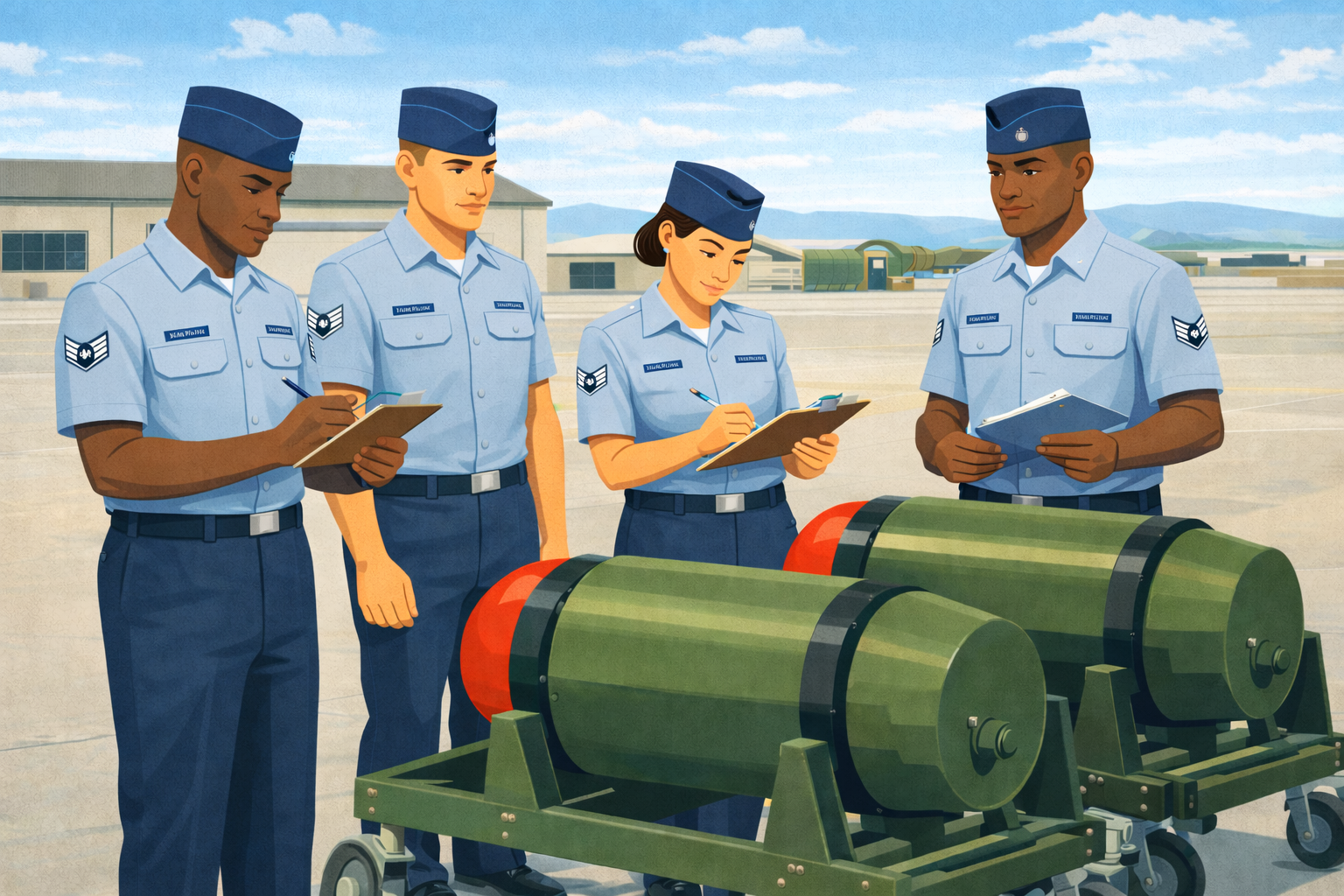
Illustration of a nuclear weapons inspection process. Shown for educational purposes only.
Your donation helps protect the world.
The Before Midnight Foundation builds technology to reduce the risk of nuclear war, pandemics, and other global catastrophes before they happen. As we create safety systems for DNA printers, modern tools for verifying arms-control agreements, and security infrastructure designed to hold up as technology advances, we strive to ensure we always stay one step ahead.
Your support funds research that governments and international organizations can truly implement. This is about preventing disaster instead of responding to crises after they occur. Help us protect lives and donate today.